What Is Noble Rot? How a Fungus Makes Great Sweet Wine
The Liquor Bro Staff ·
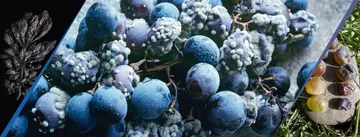
Quick answer: Noble rot is a fungus called Botrytis cinerea that attacks ripe grapes in just the right weather. It pierces the skins, lets water evaporate and leaves the grapes shriveled and packed with sugar and acidity. Winemakers press those grapes into some of the world’s most famous sweet wines, including Sauternes, Tokaji and German Trockenbeerenauslese.
How noble rot works
The same fungus can ruin a vineyard or make it famous. The difference is the weather.
- Noble rot needs misty, humid mornings followed by dry, sunny afternoons. The mist lets the fungus take hold; the sun dries the grapes so water escapes and the fungus stays under control. The grapes shrink like raisins and their sugar, acid and flavor concentrate.
- Grey rot is the bad version. In weather that stays wet, the same fungus spreads out of control, the grapes split and the crop is lost.
Because the fungus doesn’t reach every bunch at the same time, pickers often go through the vineyard several times, choosing only the shriveled berries. That slow, careful harvest and the tiny amount of juice in each grape are why these wines are rare and often sold in smaller 375ml bottles.
What does noble rot wine taste like?
Botrytis wines are sweet but balanced by bright acidity, so the best ones never taste syrupy. Common notes include honey, apricot, orange marmalade, ginger and saffron. They’re also some of the longest-lived wines there are; good bottles can improve for decades.
Famous noble rot wines
Wine
Where it’s from
Main grapes
Sauternes and Barsac
Bordeaux, France
Sémillon, Sauvignon Blanc
Tokaji Aszú
Tokaj, Hungary
Furmint, Hárslevelű
Beerenauslese and Trockenbeerenauslese
Germany and Austria
Riesling and others
Sélection de Grains Nobles
Alsace, France
Riesling, Gewürztraminer, Pinot Gris
Coteaux du Layon, Quarts de Chaume
Loire Valley, France
Chenin Blanc
A short history
Tokaj in Hungary was making wine from botrytis grapes by the 1600s, and in the 1730s its vineyards were among the first anywhere to be officially classified. Germany has its own legend: in 1775 the messenger carrying permission to start the harvest at Schloss Johannisberg arrived weeks late, the grapes rotted on the vine, and the wine made from them turned out to be remarkable. True or not, late-harvest sweet wine became a German specialty.
How to serve noble rot wines
- Temperature: chilled, around 50 to 55°F. Take the bottle out of the fridge about 15 minutes before pouring.
- Glass size: small pours of 2 to 3 oz. A 375ml bottle serves 4 to 6 people.
- Food: blue cheese (Sauternes with Roquefort is a classic), foie gras, fruit tarts and crème brûlée. Pick a dessert that’s less sweet than the wine.
Browse our sweet and dessert wines or go straight to our dessert wines.
FAQ
Is noble rot safe to drink?
Yes. The fungus works on the grapes in the vineyard; the finished wine is fermented and bottled like any other.
Why is it called noble rot?
Because, unlike ordinary rot, it improves the grapes. The French call it pourriture noble, the Germans Edelfäule, and both mean “noble rot.”
What is the difference between noble rot and grey rot?
They’re the same fungus. Noble rot happens when dry afternoons keep it in check; grey rot happens in constant wet weather and spoils the grapes.
Are all dessert wines made with noble rot?
No. Ice wine uses frozen grapes, Port is fortified with brandy, and many sweet wines come from late-picked or dried grapes. Our guide to how sweet wine is made explains the methods.
Keep reading: The sugar content in wine · German wine classifications · Sherry